Sliding doors are everywhere in Singapore. You find them on balconies, in living rooms, in bedrooms, in wardrobes, and in offices and shops. They save space and let in light. But they all share one weak point: the lock.
A sliding door lock works hard. You use it every day. Dust gets into the track. Humidity affects the metal. Over time, the lock gets loose, sticky or stops catching. Then one day you cannot lock the door at night, or you cannot open it in the morning.
This guide explains how sliding door locks work, the problems people face most, and what you can safely check yourself. It also tells you when to stop and call a professional. If you need help right now, our emergency lockout services are open 24 hours a day. You can also reach us on our contact page or call +65 9009 9339.
What Is a Sliding Door Lock?
A sliding door lock is a lock made for a door that moves sideways along a track. A normal door swings on hinges. A sliding door does not. So its lock has to work in a different way.
Most sliding door locks have four main parts:
- The lock body. This sits inside the door frame or on its edge.
- The handle or knob. You use it to lock and unlock the door.
- The hook or bolt. This moves out and grabs the other part of the lock.
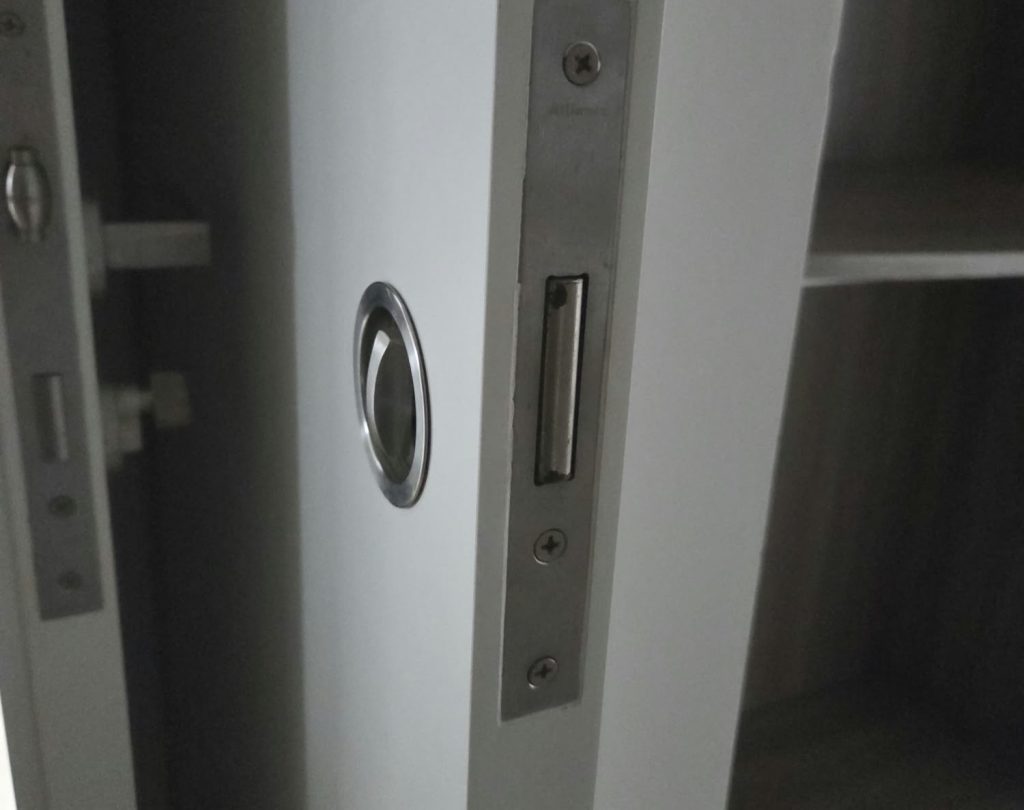
- The strike plate. This is the small metal piece on the frame or the second panel. The hook or bolt catches onto it.
When the hook lines up with the strike plate, the door is locked. If the door has moved even a little, the hook may miss. That is why alignment matters so much on sliding doors.
Common Types of Sliding Door Locks in Singapore
Not every sliding door uses the same lock. The right fix depends on what you have. Here are the types we see most often.
Hook latch and flush locks (no key)
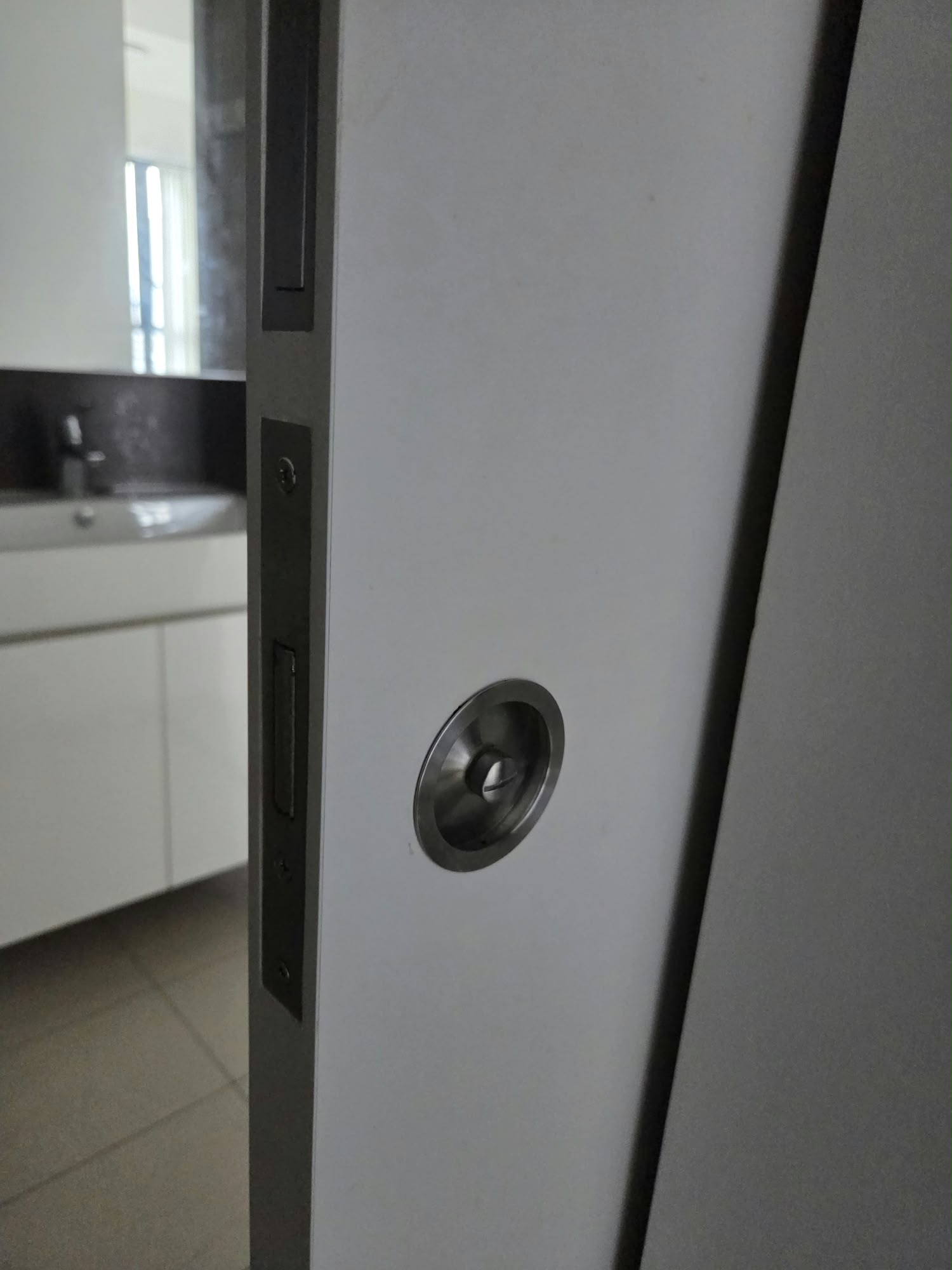
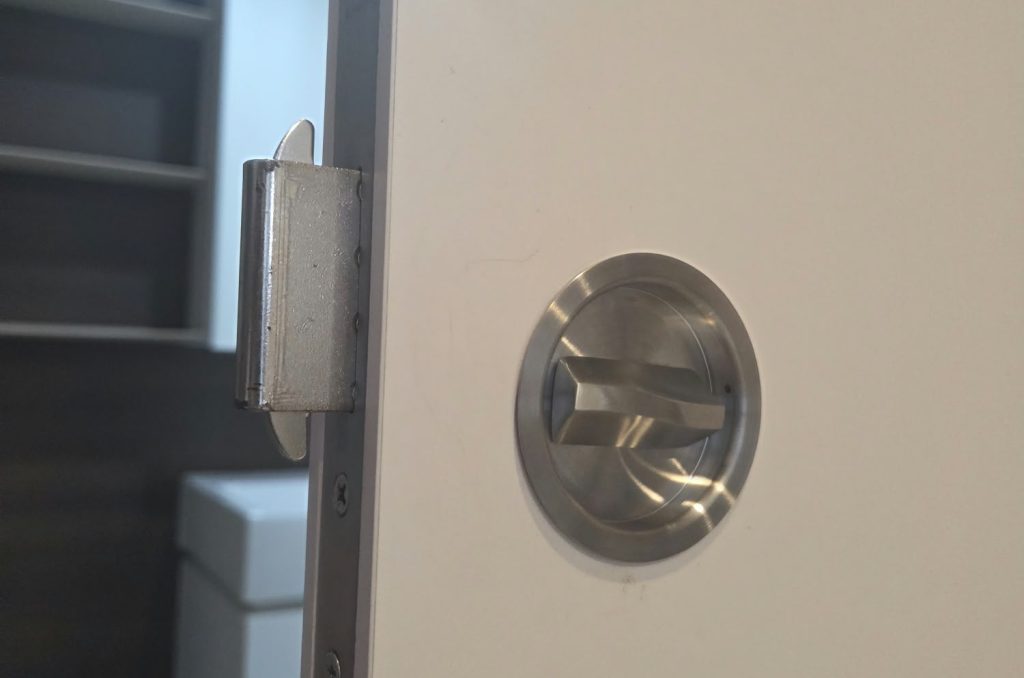
A flush lock sits level with the edge of the door. You turn a small knob or lever, and a hook swings out. Many of these locks do not use a key at all. They are common on aluminium sliding doors and windows. They are simple, but the small hook can wear down or bend.
Locks with a recess knob
Some locks have a knob that sits inside a small dip, so it does not stick out. This helps the door slide past furniture and curtains without catching. The knob turns the hook. If the knob gets loose, the lock may spin without locking.
Locks with an indicator
Some locks show a small mark or color when the door is locked. This is helpful in busy homes and shared spaces. You can see at a glance whether the door is secure. If the indicator and the lock do not match, something inside the lock may be worn.
Key-operated sliding door locks
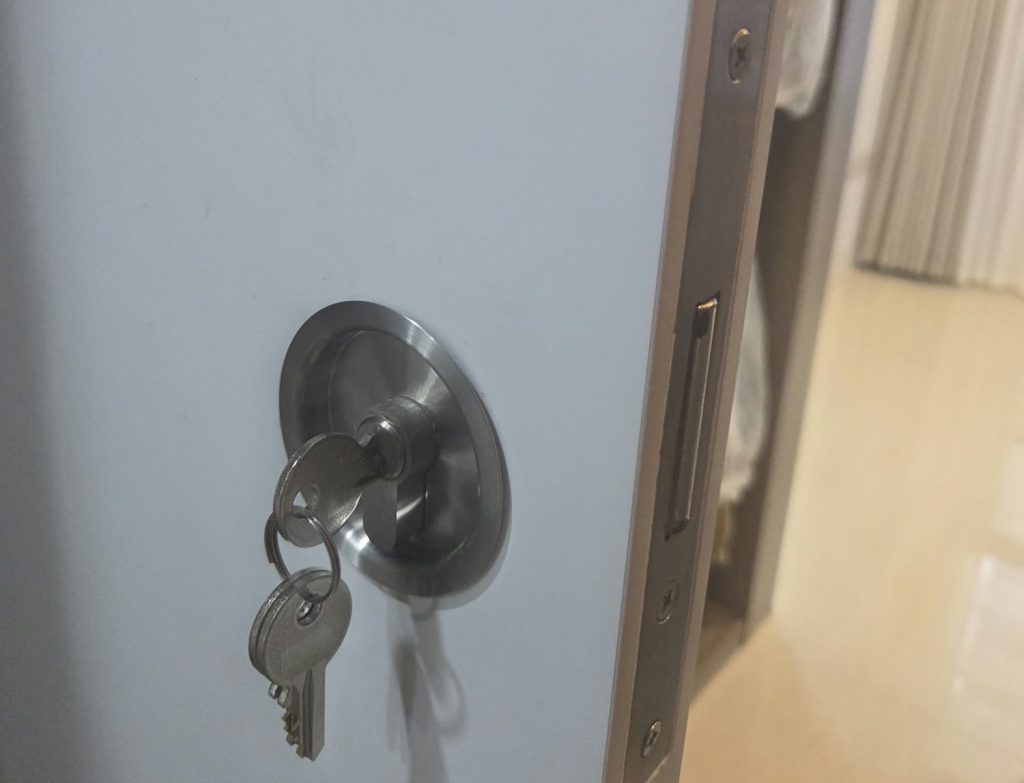
These locks use a key. They are common in offices, shops and rooms where you want more control over who can enter. A key lock gives more security than a simple latch. But keys can be lost, and cylinders can wear out or jam.
Multi-point locks (rod locks)
A multi-point lock has long rods that move up and down inside the door frame. They lock the door at more than one point. These are used on taller or heavier doors. They give stronger protection, but they have more moving parts. When one part fails, the whole lock may stop working.
Locks for glass, aluminium and wooden sliding doors
The door material matters. Aluminium frames use slim locks made to fit narrow profiles. Glass sliding doors may use clamp-style or edge-mounted locks. Wooden sliding doors, such as wardrobe doors or room dividers, often use smaller surface or mortise locks. A lock that fits one type will not always fit another. This is one reason why guessing and buying a lock online can go wrong.
Common Sliding Door Lock Problems
Most sliding door lock problems fall into a few groups. Here is what each one usually means.
The lock will not close or catch
You slide the door shut, but the hook does not grab. The most common cause is poor alignment. The door may have shifted on its track, or the rollers may be worn. Another cause is a bent or worn hook. If the strike plate has moved, the hook has nothing to catch.
The lock is stuck and will not open
The knob will not turn, or it turns but the door stays shut. Dirt, rust or a bent hook can jam the lock. Sometimes the door itself is pressing against the lock, so the hook cannot release. Forcing it can make things worse.
The key will not turn or has broken
If you have a key lock, the key may feel stiff or refuse to turn. This often means the cylinder is worn or dirty. If the key has snapped inside, stop right away. Do not push or twist the broken piece. Our key extraction service can remove it with care.
The handle or knob is loose
A loose handle spins but does not lock. Screws may have worked loose, or the inside parts may have broken. A loose handle is a warning sign. The lock may fail completely soon.
The door has come off its track or is out of line
Sometimes the lock is fine and the door is the problem. A door that sags, scrapes or jumps off its track will not line up with the lock. Fixing the lock alone will not help until the door is adjusted.
You are locked out
This happens on balconies more than people expect. You step outside, the door slides shut, and the lock engages. Or the key is inside, or the lock jams. A locked balcony door can be stressful, especially in bad weather or when children are inside.
What You Can Safely Check Before Calling a Locksmith
Before you call, a few simple checks may solve the problem. Take your time and be gentle.
1. Clean the track. Dust, hair, small stones and dirt build up in the bottom track. This stops the door from sliding all the way and lining up with the lock. Use a vacuum or a soft brush to clean it.
2. Check the lock position. Make sure the knob or lever is fully turned. If your lock has an indicator, check what it shows. Sometimes the lock is half-engaged, and a small turn is all it needs.
3. Look at the alignment. Close the door slowly and watch the hook and strike plate. Do they meet? If there is a clear gap, the door has shifted.
4. Check for loose screws. Look at the lock body and handle. If a screw is loose, you can tighten it by hand with the right screwdriver. Do not over-tighten.
5. Use a light lubricant made for locks. A small amount can help a sticky lock. Do not use thick grease. It attracts dust and can make the problem worse.
What not to do
- Do not force the knob or handle. You can snap the hook or break the inside parts.
- Do not hit the door or frame. This can bend the track or crack the glass.
- Do not try to break the glass. It is dangerous, and a new glass panel costs far more than a locksmith visit.
- Do not use improvised tools like wires, knives or screwdrivers to push the lock. They often scratch the frame and damage the lock.
If these checks do not help, it is time to call a professional.
Sliding Door Lock Repair or Replacement?
Many people ask whether they should repair the lock or replace it. The answer depends on the lock’s condition.
Repair is often enough when:
- The lock is clean but needs adjusting.
- A screw or small part is loose.
- The strike plate has moved and needs to be re-set.
- The lock works but the door is out of line.
Replacement is usually better when:
- The hook is bent, worn or broken.
- The inside of the lock is damaged.
- The key snapped and damaged the cylinder.
- The lock is very old and keeps failing.
- You lost a key and want better security.
- The lock has been forced open.
A cheap repair that keeps failing costs more in the long run. If your lock keeps giving trouble, replacement can save time and stress. You can read about our lock replacement service and our full door lock replacement guide.
How a Locksmith Opens a Locked Sliding Door
A good locksmith does not rush in and start pulling at the door. The work usually follows these steps.
First, the locksmith looks at the lock and the door. They check the lock type, the frame material, the glass and the track. This tells them what method is safe.
Next, they choose a method that suits the lock. A flush hook lock, a key lock and a multi-point lock are all opened in different ways. The right method reduces the risk of damage.
They protect the glass, frame and track. Sliding doors have glass panels and thin aluminium frames. Rough handling can chip, bend or crack them. Careful work keeps the door in good shape.
Finally, they test the lock. Once you are inside, the locksmith checks that the lock still works. If it is damaged, they explain your options before doing anything else.
For other kinds of doors, see our door lock opening service and our guide to bedroom door lock opening.
How to Choose a Replacement Sliding Door Lock
If you need a new lock, a little planning helps you get the right one the first time.
Know your door material
Aluminium, glass and wood all need different locks. Tell your locksmith what your door is made of. A clear photo of the door and frame helps a lot.
Check the size and fit
Sliding door locks come in many sizes. The frame width, the lock body size and the position of the screw holes must all match. A lock that is slightly too big or too small will not work properly.
Decide if you need a key
A non-key hook lock is simple and works well for many homes. A key lock gives you more control. For shops, offices and rooms with valuable items, a key lock is often the better choice.
Think about security
A basic latch stops the door from sliding open. It does not stop a determined person. If the door faces a balcony, a garden or a public walkway, you may want a stronger lock. Read more about high-security locks and the highest security door lock in Singapore.
Check the finish
Locks come in different finishes, such as black, white, chrome, stainless steel and natural anodised. A matching finish keeps your door looking neat.
Take photos and measurements
Before you buy anything, photograph the old lock from the front, the side and the back. Note the door thickness and the frame width. If you are not sure, ask a locksmith before you buy. Buying the wrong lock is the most common and most avoidable mistake.
Sliding Door Lock Cost in Singapore
People always ask about price, and it is fair to ask. But a real answer depends on the job. Be careful with anyone who gives a fixed price without knowing your lock.
These things change the cost:
- Lock type. A simple hook lock costs less to deal with than a key lock or a multi-point lock.
- Repair or replacement. Adjusting a lock is not the same as fitting a new one.
- Door material and condition. Glass and thin aluminium frames need extra care.
- Time of day. Late-night, weekend and holiday calls may be priced differently.
- Parts. If the lock needs a new part, that adds to the cost.
Always ask for a quote before work starts. A good locksmith will tell you what is included and what could change after the lock is checked. For a general idea of lock costs, read our guide on how much it costs to change a lock in Singapore.
How to Keep a Sliding Door Lock Working Longer
A little care goes a long way. Try these habits:
- Clean the track every month. This keeps the door sliding smoothly and lining up with the lock.
- Wipe the lock with a dry cloth. Dust and moisture are the main enemies.
- Use a small amount of lock lubricant once or twice a year. Do not overdo it.
- Do not slam the door. Slamming wears out the hook and the strike plate.
- Fix small problems early. A loose handle or a lock that catches late will only get worse.
- Keep a spare key in a safe place if your lock uses a key.
For extra security, some people add a simple bar in the track. It stops the door from sliding open even if the lock fails. Talk to your locksmith about what suits your door.
Why Choose Speedy Locksmith Singapore
Speedy Locksmith Singapore is a mobile locksmith service for homes, offices and vehicles. We come to you, so you do not need to take anything off the door yourself.
Here is what you can expect:
- 30+ years of experience with residential, commercial and automotive locks.
- 24/7 emergency help, including nights, weekends and public holidays.
- A quote before work starts, backed by our best price guarantee.
- Care for your door and lock. We inspect first and choose a method that keeps the risk of damage low.
- Honest advice. We tell you whether your lock needs a repair or a replacement.
We help homes, shops and offices across Singapore. Check our service areas to see if we cover your area. You can also see examples of our work in our gallery. If you manage a business, our commercial locksmith service guide may help.
Frequently Asked Questions
Can a locksmith open a locked sliding door without breaking the glass?
In many cases, yes. A locksmith checks the lock and door first, then uses a method that fits the lock. Breaking glass is rarely needed. It is also expensive and unsafe.
Why will my sliding door lock not close?
The most common reason is poor alignment. The door may have moved on its track, or the rollers may be worn. A bent hook or a moved strike plate can also cause it. Cleaning the track is a good first step.
Can I replace a sliding door lock myself?
Some people can, but it is not always easy. The lock must match the door material, the frame width and the hole positions. A wrong choice can damage the frame. If you are not sure, ask a locksmith.
Do all sliding door locks use keys?
No. Many sliding door locks are simple hook or flush locks that you turn by hand. Key locks are more common on shop doors, offices and rooms where you need more control.
What should I do if my key breaks inside a sliding door lock?
Stop using the key. Do not push or twist the broken piece. Call a locksmith. Our key extraction service can remove it with care.
How much does sliding door lock repair cost in Singapore?
The cost depends on the lock type, the problem, the time of day and whether parts are needed. Always ask for a quote before work begins. You can read our price guide for more information.
Final Thoughts
A sliding door lock is small, but it protects your home, your shop and your family. When it fails, it is easy to panic. Stay calm. Check the track, check the lock and check the alignment. Do not force the door or break the glass.
If the problem is still there, a professional can save you time, money and damage. Speedy Locksmith Singapore can inspect the lock, explain your options and give you a clear quote before we start.
Locked out or dealing with a faulty sliding door lock? Call +65 9009 9339 or visit our contact page to speak to our team.