A client’s gate key snapped inside a Sunrise cylinder lock. DIY removal failed. Here’s how we resolved it professionally.
The Problem
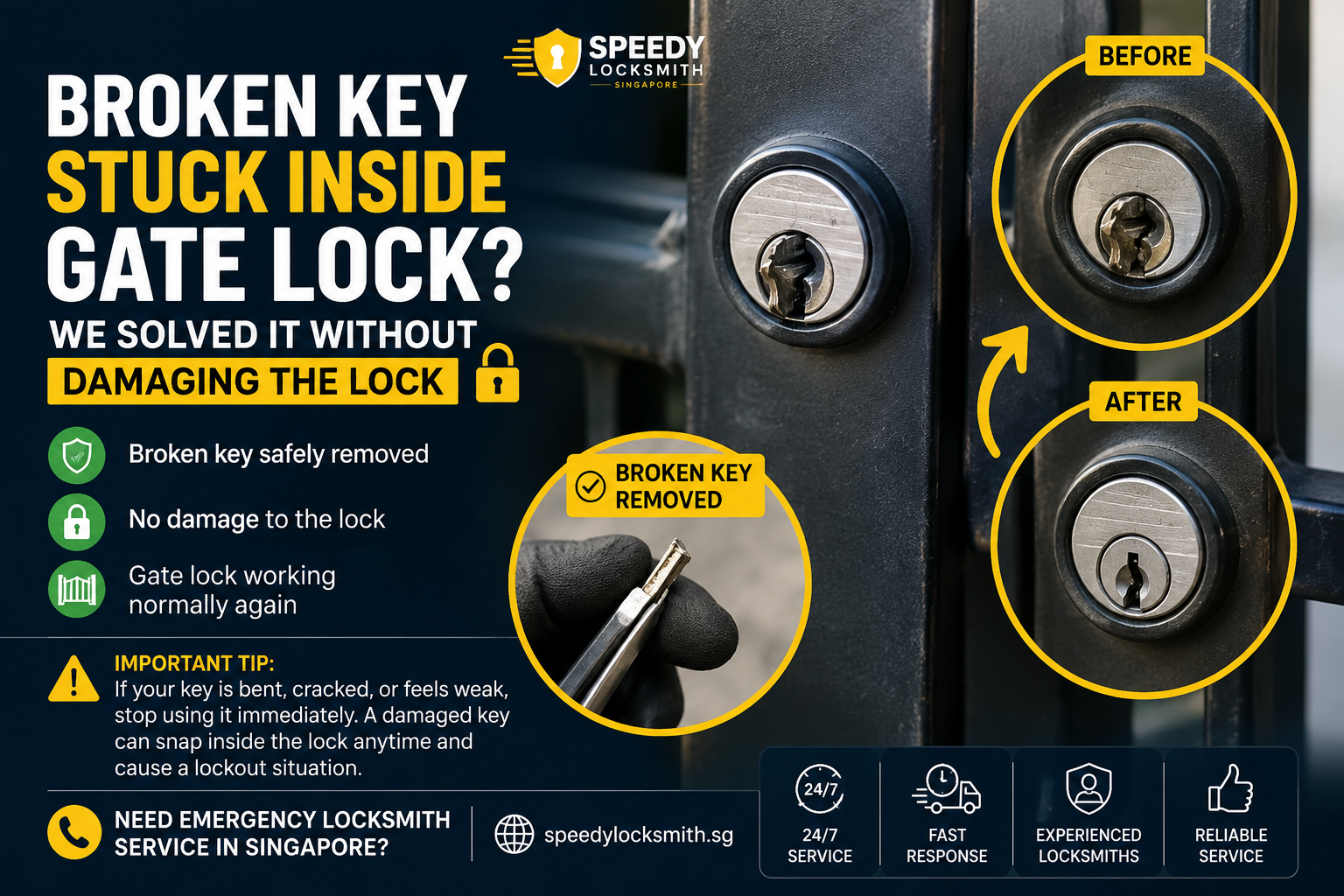
A customer contacted us after her gate became completely inaccessible. The key had broken off inside the lock cylinder, leaving a fragment lodged in the keyway. The gate could neither be locked nor opened from outside.
Before calling us, she had tried several DIY methods she found online — including using tweezers and thin wire — but none succeeded. Each failed attempt risked pushing the broken piece deeper into the cylinder or damaging the internal pins.
“Every failed attempt risks pushing the fragment deeper — making professional extraction harder.”
The Lock
The lock in question was a Sunrise brand euro cylinder — a single-cylinder type commonly installed on iron gate doors. The unit was showing signs of age: surface rust around the mounting screws and paint flaking near the escutcheon plate. Despite this wear, the lock body itself was still structurally sound.
Our Extraction Process
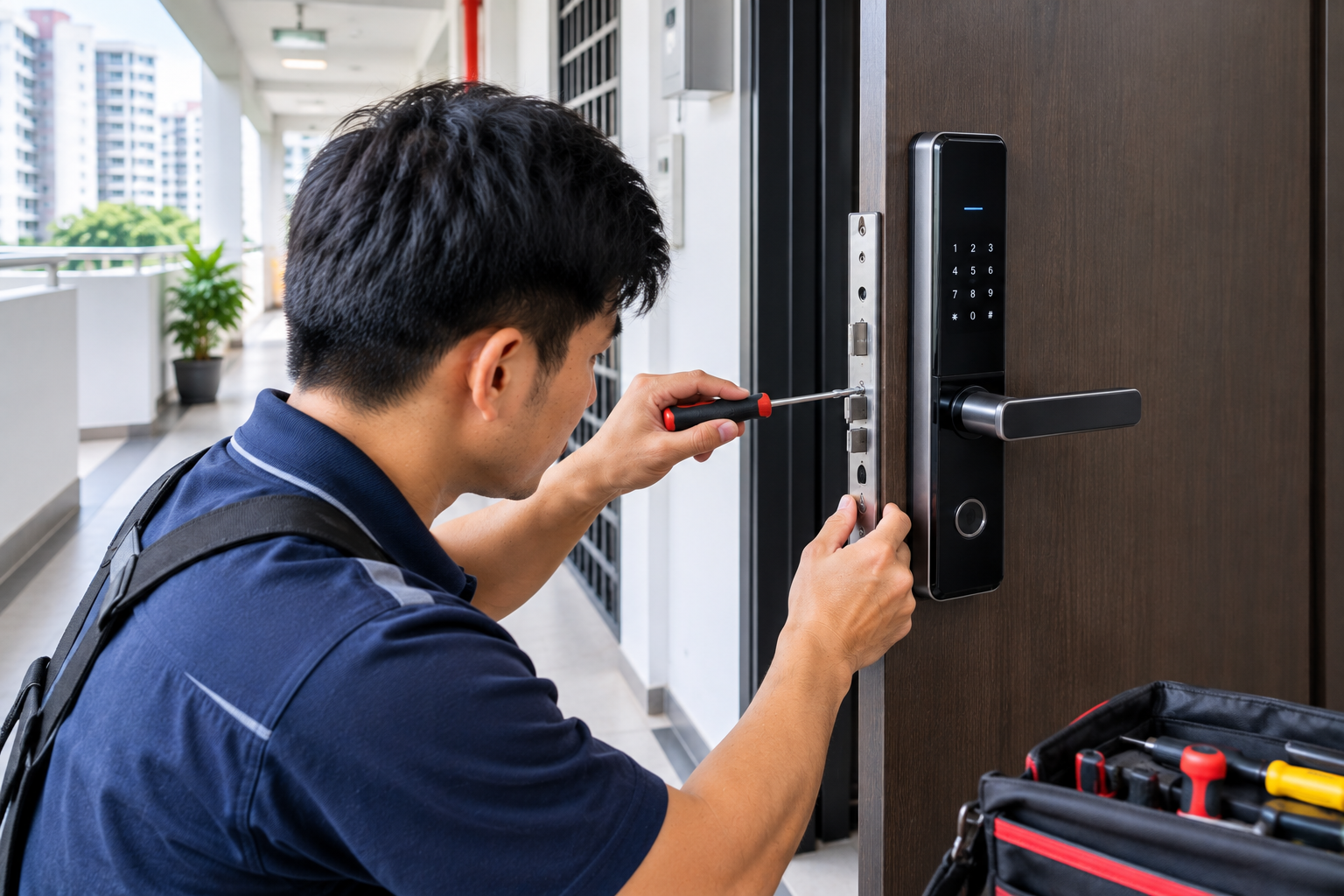
We attended the site with the appropriate extraction tools. The process followed these key steps
- Assessment — Identified the depth and angle of the broken fragment without inserting any tool blindly
- Lubrication — Applied a small amount of penetrating lubricant to reduce friction inside the keyway.
- Extraction — Used a professional broken key extractor hook to grip the key’s bitting and draw it out cleanly.
- Verification — Tested the cylinder with a spare key to confirm the lock was fully functional after extraction.
Outcome
The broken key fragment was successfully removed without any damage to the keyway, pins, or the lock cylinder housing. The lock was restored to full working order. No replacement was needed — saving the client unnecessary cost.
Important Warning
If your key is bent, cracked, or shows any visible damage — stop using it immediately. A weakened key can snap inside the lock at any time, especially under heavy turning force. Replace it before that happens.
Prevention Tips
How to avoid a broken key situation
- Inspect your keys regularly for bends, cracks, or thin spots near the bow.
- Never force a stiff or misaligned lock — get it serviced instead.
- Lubricate your lock cylinder once or twice a year with graphite spray.
- Keep a duplicate key as a backup at all times.
- If a key breaks inside the lock, do not attempt to use a second key — it will only push the fragment deeper.
Have a lock emergency? Contact your local professional locksmith — always the safer and more cost-effective choice than DIY attempts that risk further damage.